Health
KATSINA HEALTH WORKERS BEGIN SEVEN-DAY WARNING STRIKE OVER UNRESOLVED PAY DISPUTE
Healthcare delivery in Katsina State faces potential disruption after health professionals under the Assembly of Healthcare Professionals began a seve...
By Wavers News
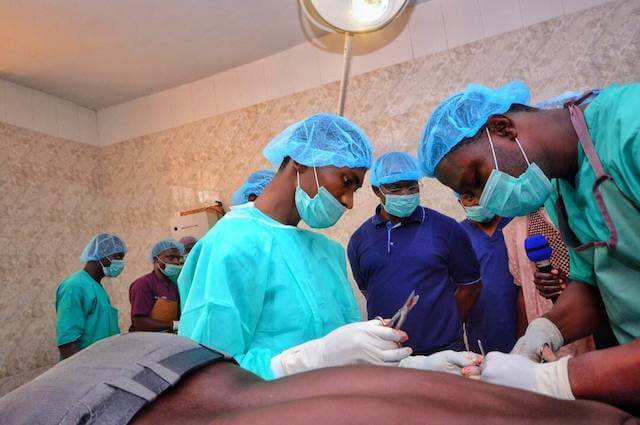
Health Workers
The industrial action commenced at midnight on October 14, following the expiration of a notice issued to the state government without what the association considered a satisfactory resolution of its grievances.
The association’s chairman, Ibrahim Balange, said the decision followed prolonged efforts to secure changes to the remuneration of healthcare workers in the state. He maintained that the workers remained open to negotiations but insisted that their outstanding demands needed to be addressed.
The development places renewed pressure on the state government and the affected health professionals to reach an agreement before the warning strike ends and the dispute potentially escalates.
THREE HEALTH WORKERS’ UNIONS INVOLVED
The Assembly of Healthcare Professionals comprises the Medical and Health Workers Union of Nigeria, the National Association of Nigerian Nurses and Midwives, and the National Union of Allied Health Professionals.
The participating unions are seeking improved remuneration and the implementation of allowances and salary adjustments that they say have remained unresolved despite previous engagements with the state government.
Balange said the assembly had issued a seven-day strike notice on October 7. However, the notice expired without an agreement that satisfied the workers, leading to the commencement of the warning strike.
The action follows earlier attempts to resolve the dispute through discussions with government representatives and other stakeholders.
The association’s position is that the outstanding issues have persisted for too long and require concrete action rather than further delays.
DISPUTE OVER ALLOWANCES DATES BACK TO 2024
According to Balange, the dispute over improved allowances began in 2024, when the state government indicated that it intended to review healthcare professionals’ benefits in line with those available to their counterparts in the Federal Government service.
The workers subsequently raised concerns about the implementation of the minimum wage, alleging that the salary table approved for their members differed from the amounts they were actually receiving.
A committee was established to investigate the complaints and submitted its recommendations in March 2025. Balange said the recommendations had not been implemented by the time the latest strike began.
The unresolved recommendations have become a central part of the association’s argument that the government has yet to address the workers’ concerns adequately.
The dispute is therefore not limited to a newly introduced demand. It involves remuneration questions that the association says have continued through several rounds of engagement with the authorities.
WORKERS REJECTED EARLIER PAY ADJUSTMENT OFFER
Balange said the Office of Public Service Reform later engaged the workers and offered an adjustment equivalent to 10 per cent of the difference between their salaries and those of healthcare professionals in federal institutions.
The assembly rejected the proposal and subsequently issued a three-week ultimatum, which was extended by another week following further discussions.
Plans for industrial action had also been suspended in September after stakeholders intervened and assurances were given that the grievances would be addressed.
However, Balange said the association was later informed that the governor had approved a 15 per cent increment, representing an additional five percentage points over the earlier offer.
He expressed dissatisfaction with the process, arguing that the association had not been involved in preparing the salary adjustment table or determining the increment before the decision was communicated.
The chairman said the workers were seeking full implementation of the allowances and salary structure applicable to healthcare professionals in federal service. He added that the association was prepared to consider 75 per cent implementation as a compromise, although some members remained opposed to accepting that level.
These figures reflect the position and account given by the association’s chairman. The state government’s response to the strike and its position on the disputed remuneration arrangements were not established in the reports reviewed.
ASSOCIATION WARNS OF POSSIBLE INDEFINITE STRIKE
The association has warned that the seven-day action could be followed by further industrial measures if the dispute remains unresolved.
Balange said the assembly would reconvene after the warning strike to assess the outcome and determine its next steps.
He cautioned that a failure to reach an agreement could lead to an ultimatum for an indefinite strike, which would represent a more prolonged dispute between the workers and the state government.
The warning does not mean an indefinite strike has already been declared. Any further action will depend on the outcome of discussions and the decision taken by the association after reviewing the situation.
Balange maintained that the association remained willing to negotiate and said the action was being undertaken in accordance with labour laws.
He also apologised to the government and members of the public for the inconvenience caused by the industrial action, while reaffirming the association’s determination to pursue its members’ welfare and professional interests.
HEALTHCARE SERVICES AWAIT RESOLUTION
The warning strike raises concerns about access to healthcare services in Katsina State while the dispute continues. However, the reports reviewed do not establish the precise extent of disruption across individual hospitals or facilities.
The potential impact will depend on the participation of affected workers, the services available at health facilities and whether negotiations produce an agreement during the seven-day period.
For residents who depend on public healthcare, a prolonged dispute could create additional difficulties in accessing services. This is a potential consequence of an extended industrial action, rather than confirmation that every public health facility in the state has shut down.
The immediate challenge is for the workers and the state government to address the outstanding remuneration issues before the warning period expires.
For now, the association has indicated that negotiations remain possible, but it has also made clear that it expects meaningful progress on its demands.