World News
Germany Proposes New Gas Levy for Consumers to Finance Emergency Energy Reserve
Germany is preparing legislation to establish a national emergency gas reserve, with the government proposing that gas customers help finance the sche...
By Wavers News
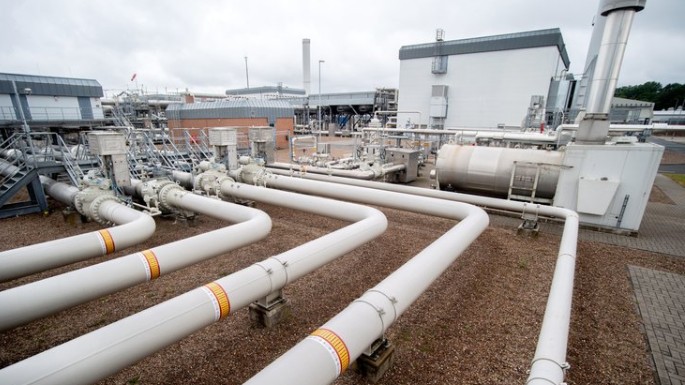
Natural gas storage infrastructure at Rehden, Germany, as the government proposes a new emergency gas reserve.
The draft legislation, prepared by the Federal Ministry for Economic Affairs and Energy under Minister Katherina Reiche, sets out plans to maintain additional gas supplies that could be used during serious disruptions to the country's energy infrastructure.
Under the proposal, a typical household could face an additional annual cost of between €3.77 and €7.20. The charge would apply to gas customers rather than automatically to every household in Germany, including homes that do not use gas.
The proposal comes as Germany seeks to strengthen its energy security and prepare for emergencies that could interrupt supplies to homes, businesses and industrial facilities.
The draft, dated October 12, 2026, was reported publicly on October 13 and has entered the government's consultation process. It has not yet become an enacted law, meaning the proposed financing arrangements and implementation timetable remain subject to the legislative process.
WHY GERMANY WANTS AN EMERGENCY GAS RESERVE
The proposed reserve is intended to provide additional protection against extreme events that could threaten the country's gas supply.
The draft identifies potential emergencies such as sabotage, damage to critical infrastructure and other exceptional disruptions affecting energy imports.
Germany depends on gas supplies to support household heating, electricity generation and industrial activity. A major interruption could therefore create difficulties for businesses and consumers, particularly if alternative supplies could not be secured quickly.
The government wants to maintain additional physical quantities of gas that could be released when the country faces a qualifying emergency.
The reserve would be separate from the normal arrangements through which energy traders, suppliers and major consumers obtain gas and prepare for seasonal demand. It is not intended to replace ordinary commercial supply arrangements or serve as a routine source of gas during winter.
Under the draft, the reserve would be activated only in specified emergency circumstances, following the declaration of the relevant emergency level by Germany's Federal Network Agency. The agency would determine whether the reserve should be used.
RESERVE DESIGNED TO HOLD 24 TERAWATT-HOURS OF GAS
The proposed reserve would have a target capacity of 24 terawatt-hours (TWh), equivalent to 24 billion kilowatt-hours of gas.
That volume represents approximately 10 per cent of Germany's gas storage capacity and is intended to provide a buffer against serious interruptions to imports.
The draft outlines several possible disruption scenarios, including the loss of Norwegian pipeline supplies, the failure of liquefied natural gas import terminals and a broader interruption affecting gas imports during periods of high demand.
The amount of time the reserve could support the country would depend on the nature of the disruption, the level of consumption and the supplies available through other routes.
For example, the proposed volume is intended to compensate for the loss of Germany's largest gas-import infrastructure for approximately 30 days. This is a planning objective, not a guarantee that the reserve could eliminate shortages under every emergency scenario.
HOW MUCH COULD GAS CUSTOMERS PAY?
The draft proposes financing the reserve through a levy on gas consumption, shifting the costs away from direct financing through the federal budget.
For a typical household in an apartment building using approximately 13,000 kilowatt-hours of gas annually, the estimated additional cost would be €3.77 per year.
For a typical household in a detached house consuming approximately 20,000 kilowatt-hours annually, the estimated cost would range from €5.80 to €7.20 per year.
The final amount would depend on the applicable levy and the quantity of gas consumed. The draft provides for the levy to be reviewed for each annual charging period rather than establishing one permanently fixed amount.
The first charging period is scheduled to begin on October 1, 2027. The proposed arrangement would therefore not introduce the charge immediately in October 2026.
Although the estimated household amounts are relatively modest, the financing method has generated disagreement because it would add another cost to gas consumption at a time when energy affordability remains a concern.
COST OF THE PROGRAMME COULD REACH €3.08 BILLION
The proposed scheme is expected to cost between €247 million and €308 million annually during its first decade, according to estimates in the draft.
Over ten years, that would amount to approximately €2.47 billion to €3.08 billion.
The costs relate to establishing and maintaining the emergency reserve, including the gas supplies required for the programme.
Under the proposed funding structure, the financial burden would not fall exclusively on households. Gas-consuming businesses and industrial users would also contribute through the levy.
Estimates included in the draft suggest that household and commercial customers would account for approximately 40 per cent of the costs, while industrial customers would cover about 60 per cent.
The actual financial burden on individual customers would depend on their consumption and the levy applied during each charging period.
FUNDING PLAN FACES POLITICAL QUESTIONS
The decision to finance the reserve through gas customers follows earlier disagreements within Germany's governing coalition over how the programme should be paid for.
Reiche had previously discussed several options, including financing through the federal budget or combining public funding with a consumer levy.
The latest draft retains the levy-based approach despite earlier criticism from members of the governing coalition who opposed transferring additional costs to consumers.
The choice matters because the different funding models would distribute the financial burden differently.
Funding the reserve directly from the federal budget would place the expenditure within government spending decisions. A levy, by contrast, would link financing more directly to gas consumption, requiring customers to contribute according to the applicable charging arrangements.
The draft's publication does not mean that the disagreement has been conclusively resolved. The proposal must still progress through the relevant legislative and consultation stages before the final arrangements can be established.
WHAT THE PROPOSAL MEANS FOR GERMANY'S ENERGY POLICY
The planned reserve reflects Germany's effort to strengthen its ability to respond to severe energy supply disruptions.
Maintaining additional gas supplies could give authorities more time to manage an emergency, coordinate alternative imports and protect essential users from the consequences of a major interruption.
However, building and maintaining the reserve would require substantial expenditure, and the government must decide how those costs should be distributed among consumers, businesses and the public sector.
The proposal also raises questions about how an emergency reserve would operate alongside Germany's existing gas storage and supply arrangements, particularly as current statutory storage-filling requirements are due to expire on March 31, 2027.
The proposed new system is intended to provide a longer-term mechanism for preparing for exceptional emergencies rather than relying solely on the existing seasonal storage framework.
For consumers, the immediate issue is that the proposed levy is not yet in force. The estimated annual costs are based on a draft plan, and the final rules will depend on the outcome of the legislative process.