World News
FRENCH POLICE FACE SCRUTINY AS STUDENT PROTESTS LEAVE HUNDREDS INJURED
French police are facing renewed scrutiny over their handling of student demonstrations after a series of confrontations left young people with seriou...
By Grace Ben | Contributor
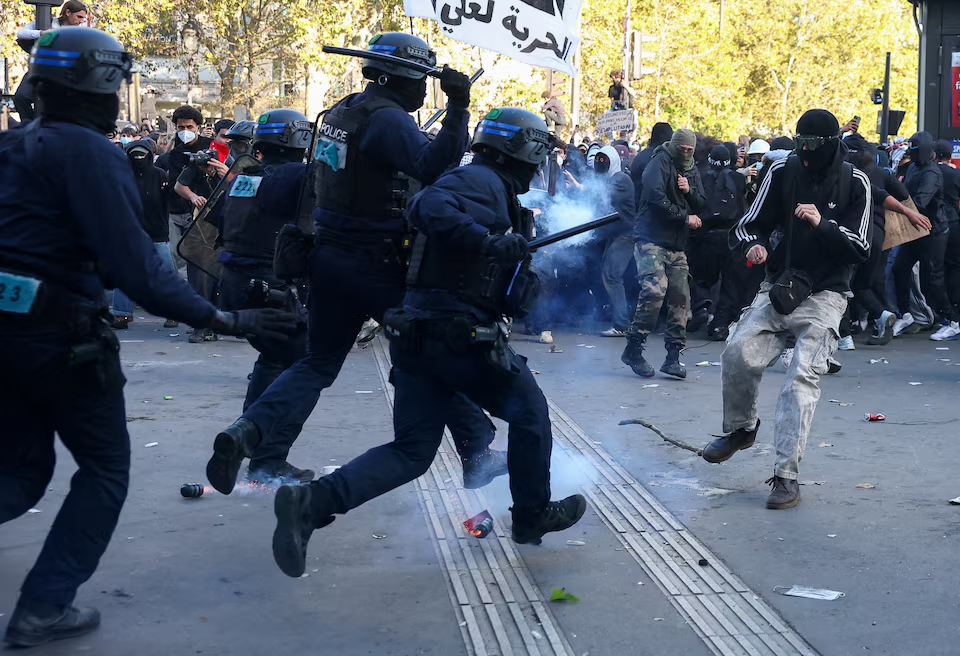
Riot police advance towards a protester during clashes at nationwide demonstrations in Paris, France, on October 8, 2026.
The incident involving the teenager, identified only as Eden, is among 24 cases being investigated by France’s police watchdog in connection with the authorities’ response to a wave of student protests over school conditions.
The demonstrations have spread across France, drawing attention to complaints about inadequate educational facilities and teacher shortages. They have also intensified debate over the use of rubber bullets, tear gas launchers and other crowd-control weapons.
French Prime Minister Sébastien Lecornu has described the demonstrations as among the most violent the country has experienced in decades.
TEENAGER SUFFERS SERIOUS FACIAL INJURIES
Eden was injured last week during a demonstration in Saint-Ouen-l’Aumône, north-west of Paris.
According to the family’s lawyer, the teenager had been sitting on a wall and looking at his phone several metres from the protest when a police officer approached him.
The local prosecutor’s account stated that an officer struck Eden with a baton after an encounter, prompting the teenager to respond by kicking the officer. A second officer subsequently fired a tear gas grenade using a Cougar launcher, striking the boy in the face.
Eden suffered a broken jaw and multiple damaged teeth. His family has filed a complaint alleging attempted murder, according to their lawyer.
The officer who fired the projectile was placed under formal investigation on suspicion of assault by a public official resulting in permanent disability or disfigurement.
The investigation remains ongoing, and the allegations have not been resolved in court.
POLICE WATCHDOG INVESTIGATES 24 CASES
Eden’s case is one of 24 incidents being examined by France’s police oversight body, the IGPN, in connection with the handling of the student unrest.
The investigations form part of wider concerns about injuries allegedly caused by police during demonstrations lasting more than two weeks.
A separate examination of interviews and legal documents identified 28 cases of injuries associated with police use of force. These included incidents involving rubber bullets, stun grenades, tear gas, batons and mounted police charges.
The cases include people who suffered serious eye injuries and others who sustained permanent physical damage.
In one incident in the northern city of Lens, a 15-year-old boy lost a hand. Interior Minister Laurent Nuñez said a stun grenade was a likely cause and temporarily suspended the use of such grenades while the circumstances were investigated.
The investigations are expected to help establish how the injuries occurred and whether officers involved acted within the law.
ANOTHER STUDENT SUFFERS AN EYE INJURY
A separate incident in Argenteuil, a suburb of Paris, involved a 16-year-old student who suffered an injury to his left eye while returning home after discovering that his school was closed.
The teenager’s lawyer said the injury could result in permanent damage. However, it remained unclear whether he had been struck by a rubber bullet or another object.
The prosecutor investigating the incident said the police account suggested that the injured student might have been one of two young people who directed fireworks at officers, who responded by firing rubber bullets.
The circumstances surrounding the incident remain under investigation.
The case has added to concerns about the potential consequences of crowd-control weapons when used during confrontations involving teenagers.
CALLS GROW TO RESTRICT CROWD-CONTROL WEAPONS
The injuries have renewed calls from human rights advocates and some politicians for France to prohibit rubber bullets and certain other weapons used during public-order operations.
Critics argue that the number of severe injuries demonstrates the need to reconsider police tactics, particularly during demonstrations involving young people.
Bally Bagayoko, mayor of Saint-Denis and a member of the left-wing France Unbowed party, has called for rubber bullets to be withdrawn from police operations. He argues that preventing injuries could help reduce tensions between officers and demonstrators.
Human rights organisations, including Amnesty International, and United Nations human rights experts have previously criticised some of France’s crowd-control methods, raising concerns about their safety and proportionality.
However, police unions oppose a blanket prohibition on the equipment, arguing that officers need options to respond to violent confrontations while protecting themselves and the public.
Thierry Clair, a police union representative, said serious injuries were tragic but argued that the use of force must be assessed in the context of the violence officers face.
INTERIOR MINISTER REPORTS ABOUT 200 STUDENT INJURIES
Nuñez has acknowledged that approximately 200 students have been injured during the unrest. However, he has disputed claims that police action was responsible for most of those injuries.
Authorities have also reported that around 700 police officers have been injured during the demonstrations.
Other incidents have involved schools being damaged or set on fire, as well as attacks on teachers and members of the public. Police have arrested 6,877 people, most of them minors.
The competing accounts have intensified disagreement over the causes of the violence and the appropriate response from law enforcement.
While critics have focused on injuries allegedly caused by police weapons, police representatives have pointed to violent confrontations and the risks officers face during demonstrations.
PROTESTS REFLECT WIDER ANGER OVER SCHOOL CONDITIONS
The demonstrations began amid student frustration over conditions in schools, including concerns about facilities and access to adequate educational resources.
The unrest has since become part of broader discontent with President Emmanuel Macron’s government ahead of France’s 2027 election.
The scale of the demonstrations and the number of reported injuries have increased pressure on authorities to address both the students’ complaints and concerns about policing.
The investigations into individual incidents could influence future discussions about officer training, the use of crowd-control weapons and the procedures governing public demonstrations.
For now, the investigations remain ongoing, while disagreements continue over whether the current approach to policing protests provides sufficient protection for demonstrators and officers.