News
FAMILIES DEMAND ANSWERS AFTER NIGERIAN AIR FORCE CRASH KILLS 25 PEOPLE
Families of the 25 people killed in a Nigerian Air Force aircraft crash are demanding answers from the authorities as recovery operations continue and...
By Patience
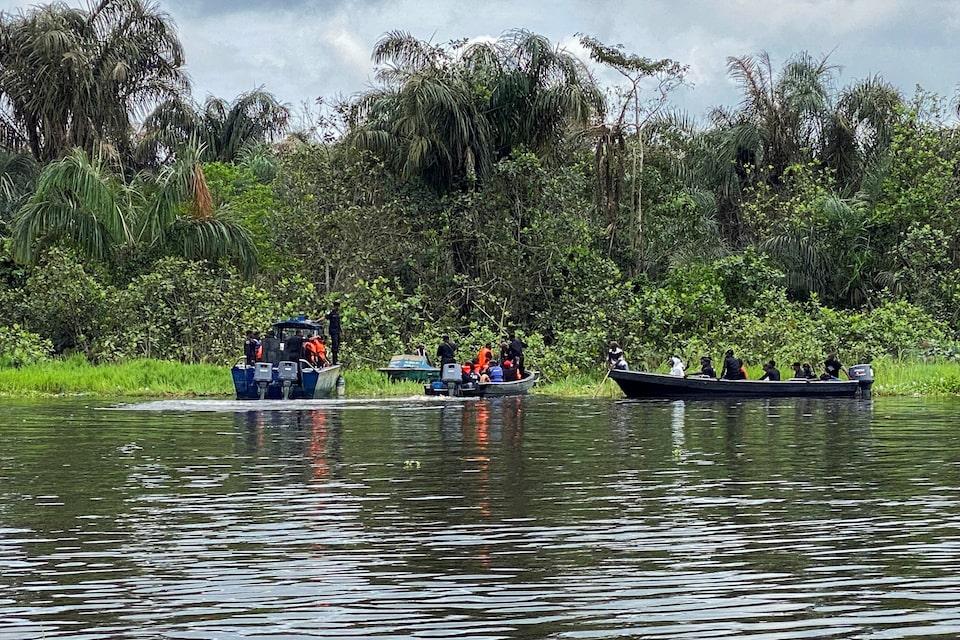
Search and rescue personnel comb through the swampy forest of Igbokoda in Ondo State, Nigeria, on October 6, 2026, a day after a Nigerian military helicopter carrying 32 passengers and crew crashed in the area.
The aircraft crashed on October 5 near Igbokoda, a riverside community in Ondo State, while travelling from Benin City to Lagos. It was on a routine mission when air traffic controllers lost contact with it.
Those killed included 19 military personnel and six civilians, according to reporting published on Friday.
President Bola Tinubu ordered an investigation into the accident, but relatives interviewed after the crash said they remained uncertain about what caused it, whether their loved ones’ remains had been recovered and when they would receive further information.
The tragedy has renewed questions about military aviation safety and the responsibilities of authorities towards families following fatal incidents.
FAMILIES STRUGGLE TO ESTABLISH WHAT HAPPENED
For some relatives, the uncertainty surrounding the crash has compounded the pain of losing loved ones.
Victor Anii, whose older sister Esther was a sergeant in the Nigerian Air Force, said he discovered a message from her asking him to send money for a bus journey from Benin City to Lagos.
Esther had reportedly been travelling with a group whose flight from Abuja stopped in Benin City because of an aircraft problem. After delays, she considered continuing the journey by road.
Hours later, news emerged that an Air Force aircraft travelling between Benin City and Lagos had crashed.
Anii said his family initially struggled to establish what had happened because they could not reach Esther or contact some of the other people travelling on the flight.
The family learned she was among the victims after the Air Force released a passenger list the following day.
Her death has left relatives seeking answers about the circumstances surrounding the flight and the events that preceded the crash.
RELATIVES QUESTION COMMUNICATION AND SUPPORT
Some bereaved families have criticised what they describe as inadequate communication from the authorities since the accident.
Anii said he publicly expressed frustration over the Air Force’s handling of information for relatives. Two days later, he said, an Air Force commander visited his parents’ home in Abuja with two envelopes.
One contained a condolence letter. The family did not open the second because they suspected it contained money.
Anii said financial assistance would not address the central concern facing his family: understanding what happened and ensuring similar incidents could be prevented.
When asked about assistance for families and the recovery of remains, an Air Force spokesperson referred to previous statements saying the service had pledged support to affected relatives and intensified search and recovery operations.
The spokesperson did not address the specific allegation concerning the second envelope.
The accounts highlight the importance of timely, direct communication with families after a fatal military incident, particularly when recovery operations and investigations are still underway.
SIX CIVILIANS WERE AMONG THE VICTIMS
Six civilians were among the 25 people killed, raising further questions for families trying to establish what happened to their relatives.
Damilola Folorunsho said her 36-year-old brother, Sunday, was among the civilian passengers. She said the family had not received direct communication explaining the progress of recovery efforts or the status of his remains.
The family lives approximately 200 kilometres from the crash site and has been left waiting for information.
The presence of civilians aboard the aircraft has also prompted questions about the arrangements under which they were travelling.
The Air Force had not clarified whether carrying civilians on such flights was standard practice.
Establishing the purpose of the flight, the circumstances surrounding the passengers’ travel and the aircraft’s operational condition may form part of the broader questions surrounding the incident.
However, the cause of the crash remains unknown, and no conclusion should be drawn about whether the presence of civilians contributed to the accident.
INVESTIGATION INTO THE CRASH
President Tinubu directed the Nigerian Air Force to investigate the cause of the October 5 crash.
The aircraft was travelling from Benin City to Lagos when it lost contact with air traffic controllers. Its wreckage was subsequently located near Igbokoda in Ondo State.
The swampy terrain around the crash site has complicated recovery operations, making the search for wreckage and human remains particularly difficult.
The Chief of the Air Staff subsequently announced the establishment of a panel to investigate the incident and visited the crash site.
Investigators will need to establish the sequence of events leading to the accident and determine whether mechanical, operational or other factors contributed to it.
The findings could also help identify any safety measures that need to be strengthened to reduce the risk of future military aviation accidents.
As of October 16, the reports reviewed did not establish a definitive cause of the crash.
FRESH QUESTIONS OVER MILITARY AVIATION SAFETY
The tragedy has renewed concerns about safety and accountability within Nigeria’s military aviation system.
Military aircraft perform important duties, including transporting personnel and equipment, surveillance and other operational missions. These responsibilities make effective maintenance, rigorous operating procedures and thorough accident investigations essential.
The latest crash has also highlighted the need for clear procedures governing communication with families when military personnel or civilians die during official operations.
Relatives need reliable information about confirmed casualties, the identification and recovery of remains, available assistance and the progress of investigations.
When that information is delayed or difficult to obtain, uncertainty can deepen the distress experienced by bereaved families.
A transparent investigation and clear communication from the authorities will therefore be important both for the families seeking closure and for public confidence in military aviation safety.
FAMILIES WANT ANSWERS AND ACCOUNTABILITY
For the relatives of those killed, the immediate priority is to understand what happened to their loved ones and obtain reliable information about the recovery process.
Some have also called for greater accountability, arguing that identifying the cause of the crash is essential to preventing similar tragedies.
The Nigerian Air Force has said it is supporting affected families and continuing search and recovery operations. However, the families’ accounts show that questions about communication and the status of the investigation remain unresolved.
Until investigators establish the circumstances surrounding the crash and communicate their findings, relatives will continue to face uncertainty alongside their grief.
The tragedy has left 25 families mourning and placed renewed attention on military aviation safety, official accountability and the treatment of relatives following fatal accidents.