News
EU Pledges €20 Million Military Assistance to Nigeria Amid Persistent Security Challenges
Nigeria is set to receive €20 million in defence assistance from the European Union (EU) as the Federal Government intensifies efforts to tackle terro...
By Patience
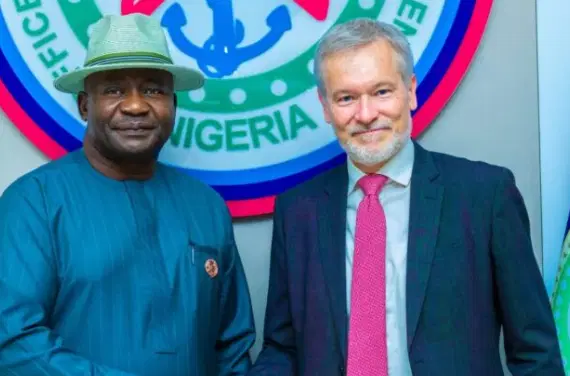
The proposed support was discussed during a meeting in Abuja between Nigeria's Minister of Defence, General Christopher Musa (retd.), and the EU Ambassador to Nigeria and the Economic Community of West African States (ECOWAS), Gautier Mignot.
The assistance will be provided through the European Peace Facility, an EU mechanism that supports peace and security initiatives.
According to a statement released by the defence minister's media aide, Leah Katung-Babatunde, an EU technical delegation is expected to visit Nigeria in November to discuss the arrangements for delivering the support.
The announcement comes as Nigerian security agencies continue operations against armed groups while confronting persistent threats, including attacks on isolated communities and kidnappings along major highways.
EU AND NIGERIA DISCUSS SECURITY COOPERATION
The proposed assistance was a key issue during discussions between Musa and Mignot at the Ministry of Defence in Abuja.
Their meeting focused on bilateral defence agreements and ways to strengthen security cooperation between Nigeria and the European Union.
The EU ambassador commended the Nigerian government's efforts to address the country's security challenges and expressed the bloc's continued interest in supporting initiatives aimed at improving stability.
Mignot also invited the Nigerian defence minister to attend a meeting of defence ministers scheduled to take place in Brussels later in the year.
The proposed €20 million package is expected to form part of the broader cooperation between both sides on defence and security matters.
However, the precise allocation of the funds and the specific equipment or programmes to be financed will be discussed during the planned technical engagement in November.
NIGERIA EXPECTS ADDITIONAL MILITARY EQUIPMENT
During the meeting, Musa disclosed that Nigeria was expecting 10 attack helicopters, unmanned aerial vehicles and other military equipment to strengthen ongoing security operations.
Such equipment could support military activities, including surveillance and operations against armed groups, depending on the capabilities of the systems supplied and how they are deployed.
The minister expressed appreciation for the EU's continued assistance and reaffirmed the Federal Government's commitment to protecting lives and promoting national development.
He also said the efforts of the armed forces and other security agencies were gradually restoring relative peace in some troubled areas.
Nevertheless, he acknowledged that kidnapping along major highways and attacks on isolated communities remained significant challenges requiring continued attention.
The expected equipment deliveries and the proposed EU assistance form part of wider efforts to improve the country's capacity to respond to security threats.
LAKE CHAD REGION REMAINS A SECURITY CONCERN
The discussions also addressed security challenges around the Lake Chad Basin, a region that supports more than 50 million people across several countries.
Musa identified the shrinking of the basin as a factor contributing to instability in the region.
He stressed the importance of preventing terrorist groups from using islands in Lake Chad as operational bases.
The Multinational Joint Task Force, which coordinates regional military efforts against insurgency, continues to play a role in addressing threats that cross national borders.
Nigeria's security challenges are closely connected to developments in neighbouring countries, particularly where armed groups operate across remote border areas.
Cooperation among affected countries remains important for intelligence sharing, military coordination and efforts to prevent armed groups from exploiting difficult terrain.
The minister's remarks underscored the need to combine national security operations with regional cooperation to address the wider factors contributing to instability.
GOVERNMENT EMPHASISES SUPPORT FOR CONFLICT VICTIMS
Musa also addressed Nigeria's disarmament, demobilisation and reintegration programme, commonly known as DDR.
He said the programme should prioritise victims of conflict, including military personnel affected by the insurgency.
Such programmes are intended to support processes through which eligible former combatants leave armed groups and reintegrate into civilian life, while taking account of the wider needs of communities affected by violence.
The minister's comments highlighted the importance of considering the experiences of victims and affected personnel alongside military operations.
Communities that have endured prolonged insecurity often face additional difficulties, including displacement, disrupted livelihoods and limited access to essential services.
Addressing these consequences remains an important part of efforts to achieve lasting stability in affected areas.
SECURITY CHALLENGES CONTINUE ACROSS NIGERIA
Nigeria continues to confront multiple security threats, ranging from the insurgency in the northeast to kidnappings, banditry and attacks on rural communities in other parts of the country.
The prolonged conflict involving Boko Haram and Islamic State West Africa Province has caused widespread loss of life and displacement, particularly in the northeastern states.
Meanwhile, criminal groups have continued to threaten travellers and residents in some areas, creating concerns about safety along major transport routes.
Although military operations have helped improve security in some locations, persistent attacks demonstrate the difficulties involved in maintaining stability across affected regions.
The proposed European assistance comes as the government seeks additional support and equipment to strengthen the capabilities of the armed forces.
The effectiveness of the support will depend partly on how the assistance is allocated, when it is delivered and how it complements Nigeria's existing security programmes.
WHAT HAPPENS NEXT?
The next major step is the expected visit by an EU technical delegation in November to agree on the arrangements for the €20 million assistance package.
Until those discussions are concluded, the precise delivery schedule and details of the support remain to be established.
For Nigeria, the proposed assistance represents another development in its defence cooperation with international partners as the country continues efforts to address terrorism and other security threats.
The government will also need to sustain its own security initiatives while working with neighbouring countries and international partners to address threats that extend beyond its borders.
Whether the proposed assistance produces a significant improvement will depend on its implementation and the ability of security agencies to translate additional support into more effective operations.