Business
CHINESE ELECTRIC VEHICLE MAKERS EXPAND OVERSEAS AS EXPORTS SURGE
Chinese new-energy vehicle manufacturers are expanding their presence outside China through overseas factories, research operations and partnerships ...
By Wavers Multimedia
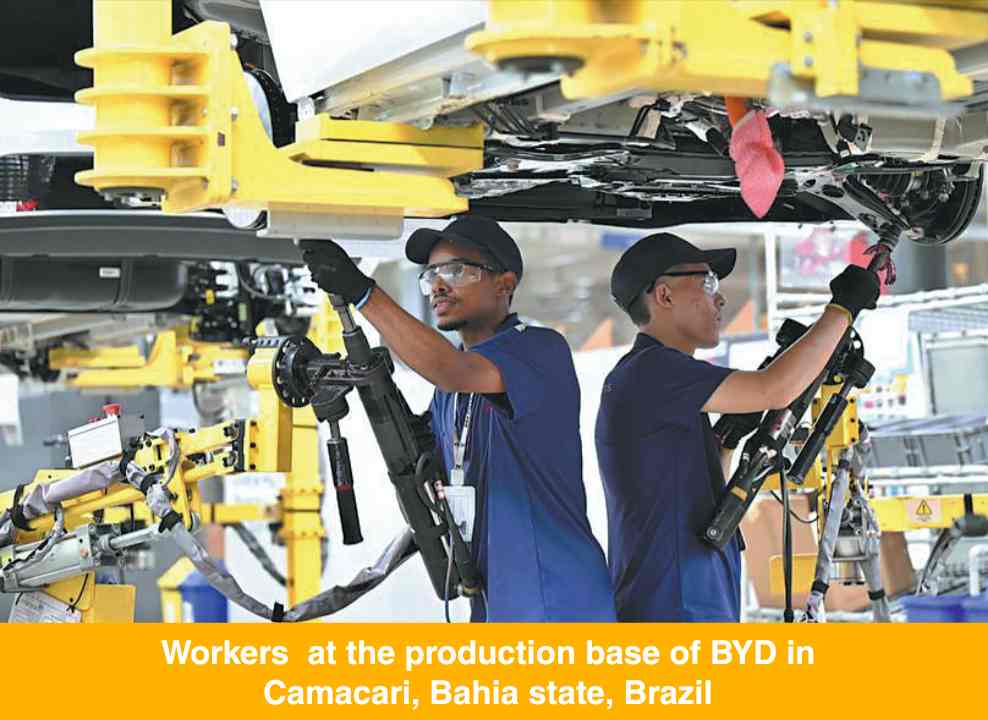
The expansion is moving beyond simply exporting finished vehicles. Several Chinese automakers are establishing production facilities and supply chains in foreign markets, creating jobs while seeking to adapt their vehicles to local conditions.
CHINESE AUTO EXPORTS CONTINUE TO RISE
China exported 7.153 million vehicles during the first eight months of 2026, representing a 66.7 percent increase from the same period a year earlier, according to figures from the China Association of Automobile Manufacturers.
New-energy vehicle exports accounted for 3.435 million units during the period, more than double the figure recorded a year earlier.
AUTOMAKERS BUILD PRODUCTION BASES ABROAD
Chinese manufacturers are increasingly investing directly in overseas production rather than relying entirely on exports.
Chery opened a manufacturing plant in Rosslyn, South Africa, in July. The facility retained 692 employees and is expected to contribute to the creation of nearly 3,000 jobs across its wider supply chain.
In Brazil, BYD has established operations covering production, research and development, sales, services and supply chains. Its facility in Bahia employed 5,500 direct workers as of July, with 86 percent of those employees coming from the state.
The Brazilian operation is expected to support up to 20,000 direct and indirect jobs once fully operational, while BYD has set a target for local suppliers to provide more than half of its components by 2027.
CHINESE BRANDS GAIN GROUND IN EMERGING MARKETS
Chinese electric vehicle manufacturers are also expanding across Southeast Asia, the Middle East, Africa and other emerging markets.
Chery has expanded its presence to more than 130 countries and regions and has adapted some vehicle features to local conditions. The company has made changes intended to suit mountainous areas in South America and desert conditions in the Middle East.
In Malaysia, Zeekr, the premium new-energy vehicle brand associated with Geely, entered the market in December 2024 and has since expanded its presence in the country.
The growing presence of Chinese brands is also increasing competition among automakers, with local industry participants saying the competition is encouraging manufacturers to improve vehicle technology and features.
EUROPEAN AND GLOBAL MARKET PRESENCE GROWS
Chinese vehicle brands are also increasing their presence in Europe.
Recent industry data cited in the report showed that new-car registrations of Chinese brands in Europe exceeded those of Japanese brands for two consecutive months.
Chinese electric vehicle makers have also expanded their market presence in Thailand, Singapore and Middle Eastern markets, adding to the geographic reach of their international operations.
The expansion reflects growing competition in the global automotive industry as manufacturers compete over price, technology, battery performance and vehicle features.
EXPANSION COULD SUPPORT LOCAL INDUSTRIES
The overseas investments are also creating opportunities beyond vehicle sales.
Factories and related supply chains can generate local employment, encourage technology transfer and increase manufacturing capacity in host countries.
In South Africa, officials have linked Chery's investment to potential technology transfer and the development of advanced manufacturing capabilities. In Brazil, BYD's plans include increasing the share of locally sourced components as its operations expand.
CHINESE NEVS AND THE GLOBAL ENERGY TRANSITION
The expansion of electric vehicle production is also contributing to the wider shift away from conventional fuel-powered transportation.
The International Energy Agency estimates that the global electric vehicle fleet displaced about 1.7 million barrels of oil demand per day in 2025, with China accounting for roughly 1 million barrels per day of that reduction.
With exports rising and manufacturers investing in factories, supply chains and local operations abroad, Chinese new-energy vehicle companies are becoming a more significant part of the global automotive market. Their expansion is also bringing greater competition to established automakers while increasing the role of electric vehicles in international markets.