Technology
Chinese Electric Bike Imports Surge Across Africa as EV Investment Takes Different Paths
NAIROBI, Kenya — Africa is rapidly expanding its shift toward electric transportation, with imports of electric motorcycles and three-wheelers from Ch...
By Wavers Multimedia
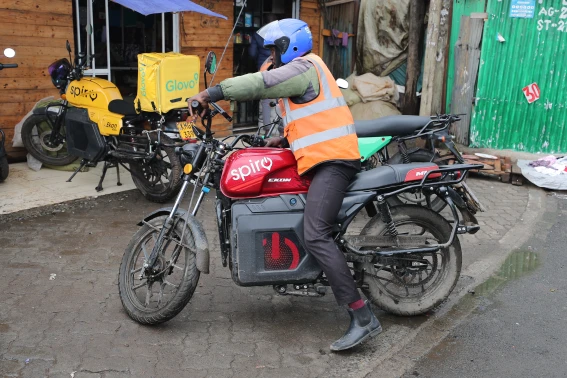
Imports increased by 60% to $114.6 million, highlighting a growing electric-vehicle market across the continent while also revealing significant differences in how countries are adopting the technology.
Electric motorcycles and three-wheelers make up a significant portion of vehicles on African roads and are widely used for commercial transportation. Moving from gasoline and diesel-powered motorcycles to electric alternatives could therefore reduce fuel consumption and urban air pollution.
Morocco leads African imports
North African countries are driving much of the growth in Chinese electric vehicle imports.
Morocco, Egypt and Algeria recorded the largest import volumes during the first half of the year, with Morocco emerging as the leading destination.
Morocco imported 80,188 electric motorcycles and related vehicles worth $21.7 million during the period.
Egypt and Algeria followed Morocco among the leading importers.
In sub-Saharan Africa, South Africa recorded the highest imports, bringing in 19,635 electric bikes worth $6.9 million.
The figures show that electric mobility is expanding across different parts of Africa, although the vehicles and their uses vary considerably from one region to another.
Two different EV markets emerging
The growth is developing along two distinct paths.
In North Africa, Chinese electric vehicles are largely being purchased by individual consumers. Electric scooters and mopeds are increasingly being used for commuting and short-distance journeys.
In East and West Africa, electric motorcycles are more commonly being developed for commercial purposes.
Motorcycle riders in these markets can travel up to 150 kilometers, or about 100 miles, a day, carrying passengers and goods. That makes operating costs and the ability to quickly replace batteries particularly important.
Companies are consequently investing not only in electric motorcycles but also in the infrastructure needed to keep commercial riders working throughout the day.
Spiro expands investment
Spiro, described as Africa's largest electric-bike company, has raised more than $348 million in investments over the past year.
Other companies are also putting money into local assembly facilities, battery-swapping networks and charging infrastructure aimed at commercial motorcycle taxi and delivery markets.
Battery swapping has become an important part of the business model.
Instead of waiting for a motorcycle's battery to recharge, riders can replace a depleted battery with a charged one. This can be particularly useful for commercial riders whose income depends on keeping their motorcycles operating throughout the day.
China remains a major supplier
Chinese manufacturers continue to supply many of the electric motorcycles being used in East and West Africa.
However, companies operating in Africa are adapting the vehicles and developing the infrastructure around them to suit local commercial markets.
Much of the region's industry still relies on imported components rather than completely manufacturing motorcycles locally.
Motors, controllers and battery cells are largely imported, while local production is more concentrated on simpler components such as seats, footrests and metal frames.
The developing local industry is therefore increasingly focused on assembling vehicles and building the wider ecosystem required to operate them.
Electric motorcycles gain ground in East Africa
Electric motorcycles are already making significant progress in some African markets.
They accounted for about 20% of motorcycle sales in Uganda last year and approximately 15% in Kenya, according to estimates cited in the report.
The shift could also reduce countries' dependence on imported fuel.
Widespread electrification of motorcycles could eventually displace approximately $600 million in fuel imports in Uganda and between $600 million and $800 million in Kenya.
The potential savings come from replacing gasoline-powered motorcycles with vehicles that use electricity instead of imported petroleum products.
Battery standards remain a challenge
Despite the rapid growth, the electric motorcycle industry faces challenges that could slow its expansion.
One major problem is the lack of standardization among battery-swapping systems.
Operators often use their own batteries, connectors and software. This means a rider using one network may not be able to use batteries from another company's network.
The fragmentation also makes it harder for manufacturers to achieve the scale needed to produce batteries locally and can reduce their resale value.
The industry therefore faces a difficult balance: battery swapping has helped solve the problem of limited range for commercial riders, but closed systems could make it more difficult for the broader market to develop efficiently.
Financing and infrastructure key to growth
The future of electric motorcycles in Africa will depend on more than vehicle imports.
Affordable financing will be important for riders and businesses looking to acquire electric motorcycles. Reliable electricity, charging and battery-swapping infrastructure will also be necessary to support wider adoption.
Predictable government policies and greater standardization across different markets could further help the industry expand.
While Chinese manufacturers remain important suppliers, the development of local assembly, servicing, financing and energy infrastructure could determine how successfully Africa builds its own electric-mobility ecosystem.
The sharp increase in Chinese electric motorcycle imports shows that the transition is already underway, but the different approaches across Africa suggest that the continent's electric-vehicle market will continue to develop according to the needs of individual countries and regions.