Technology
CHINA’S FACTORIES GAIN MOMENTUM AS WEAK CONSUMER SPENDING WEIGHS ON ECONOMY
China’s industrial sector strengthened in August, with factory output growing faster than in July, while weak consumer spending and declining investme...
By Patience
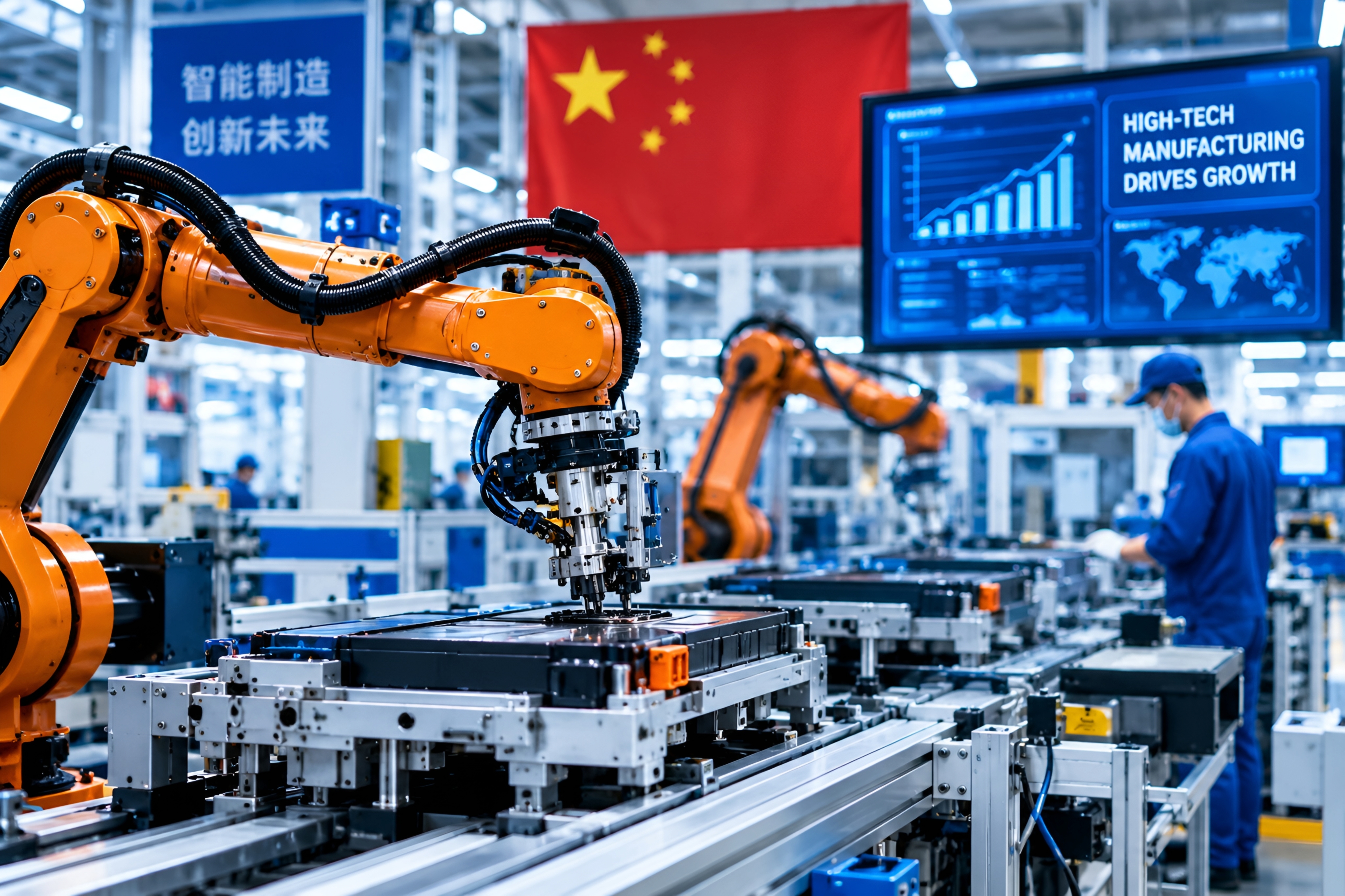
Official data released on September 15 showed that industrial production increased 5.2 percent year-on-year in August, accelerating from 4.5 percent in July. The performance was stronger than economists had expected.
The latest figures present a mixed picture of China’s economy, with manufacturing and high-tech industries showing strong momentum while domestic demand remains relatively weak.
INDUSTRIAL PRODUCTION ACCELERATES
Industrial output increased 5.2 percent in August compared with the same month a year earlier, according to the National Bureau of Statistics.
Manufacturing performed particularly strongly, with value added increasing 6.1 percent year-on-year. Equipment manufacturing grew by 12.1 percent, while high-tech manufacturing increased by 16.7 percent.
The figures suggest that advanced manufacturing continues to be one of the stronger areas of China's economy.
HIGH-TECH INDUSTRIES DRIVE FACTORY GROWTH
Several technology-related products recorded particularly strong increases during August.
Production of lithium-ion batteries rose 57.2 percent, while industrial robot production increased 34.6 percent. Output of 3D-printing equipment also grew by 29.9 percent.
The strong performance of these industries highlights China's continued expansion in advanced manufacturing and technology-related production.
CONSUMER SPENDING REMAINS WEAK
Despite stronger factory activity, consumer demand remained a concern.
Retail sales increased just 0.4 percent year-on-year in August, slowing from 0.6 percent in July. The August figure also fell short of market expectations.
On a month-to-month basis, retail sales declined 0.13 percent, indicating that household consumption remained subdued.
The weakness in consumer spending means China's industrial recovery has not been matched by equally strong domestic demand.
INVESTMENT CONTINUES TO DECLINE
Investment was another weak point in the latest data.
Fixed-asset investment excluding rural households fell 7.2 percent during the first eight months of 2026 compared with the same period a year earlier.
Real estate investment was particularly weak, declining 19.9 percent during the period. Manufacturing investment fell 2.3 percent, while infrastructure investment declined 4.0 percent.
However, investment in high-tech industries increased 5.2 percent, while investment in information services rose 22.7 percent.
CHINA’S PROPERTY SECTOR REMAINS UNDER PRESSURE
The property market continues to be one of the major challenges facing China's economy.
Real estate development investment fell 19.9 percent in the first eight months of the year. New home sales also remained weak, with the area of newly built homes sold declining 12.1 percent and sales value falling 13.0 percent over the same period.
The prolonged property downturn has contributed to weaker investment and continues to affect confidence across parts of the economy.
FOREIGN TRADE PROVIDES ANOTHER SOURCE OF STRENGTH
China's external trade showed stronger momentum in August.
The country's total goods imports and exports increased 19.8 percent year-on-year in August, while exports increased 18.6 percent and imports rose 21.7 percent, according to official data.
For the first eight months of 2026, total goods trade increased 17.6 percent. Machinery and electronic products remained an important part of China's export performance.
EMPLOYMENT REMAINS RELATIVELY STABLE
China's urban surveyed unemployment rate stood at 5.3 percent in August, up 0.1 percentage point from July.
The average urban surveyed unemployment rate for the first eight months of the year was 5.2 percent, unchanged from the same period a year earlier.
The figures indicate that employment has remained broadly stable, although the slight increase in August adds to the challenges facing policymakers.
CHINA’S ECONOMY SHOWS A MIXED PICTURE
The August figures do not point to a uniformly strong or weak Chinese economy.
Manufacturing, high-tech production and exports have provided important sources of momentum, while consumer spending, fixed-asset investment and the property sector remain under pressure.
The National Bureau of Statistics said the economy maintained generally stable development but also acknowledged challenges, including weak demand and difficulties faced by some businesses.
For policymakers, the challenge will be to maintain the strength of China's industrial and technology sectors while encouraging stronger domestic consumption and investment.