Business
Africa’s Start-ups Turn to Debt as Funding Crunch Reshapes $1.2bn Market
African start-ups are increasingly turning to debt financing as a slowdown in venture capital funding reshapes the continent’s estimated $1.2 billion ...
By Wavers Multimedia
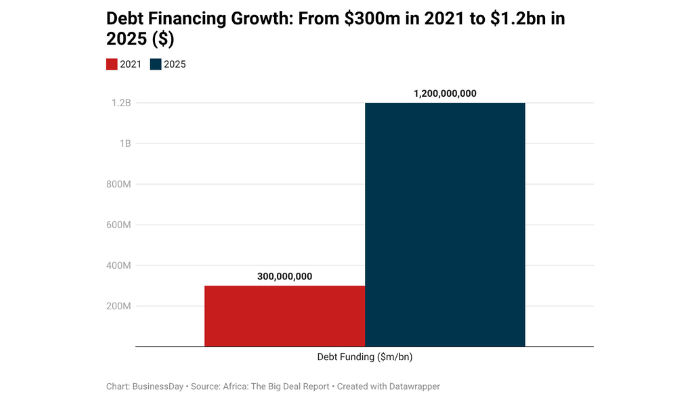
In recent years, equity funding has been the dominant source of capital for many African tech startups. However, tighter global financial conditions, rising interest rates, and cautious investor sentiment have made venture capital harder to secure. As a result, founders are now exploring alternative funding options, with debt emerging as a viable solution.
Unlike equity financing, debt allows startups to raise capital without giving up ownership stakes. This has become particularly attractive to founders seeking to maintain control while still accessing funds needed for expansion, operations, and scaling.
Industry analysts note that the shift is not just a temporary response but a structural change in how African startups are financed. Lenders, including fintech platforms and specialized credit providers, are increasingly stepping in to fill the gap left by declining venture capital inflows. These lenders often provide revenue-based financing, asset-backed loans, and other flexible credit solutions tailored to early-stage companies.
The funding crunch has also forced startups to rethink growth strategies. Many are now prioritizing profitability, cost efficiency, and sustainable business models over aggressive expansion. Investors, on their part, are demanding clearer paths to revenue and stronger financial discipline before committing funds.
Despite the challenges, experts say the African startup ecosystem remains resilient. While equity funding may have slowed, the rise of debt financing is helping to keep businesses afloat and, in some cases, enabling more disciplined growth.
As the market continues to evolve, stakeholders believe a balanced mix of equity and debt financing could create a more stable and mature startup ecosystem across the continent.